
Find the earliest entrance
A pickup is musical material that leads into the first full bar or a new phrase. A singer may start before the chord change that the rest of the band thinks of as the section’s beginning. The count-in must prepare that earlier entrance.
First locate the full downbeat. Then work backward to the first note anyone plays. Steinberg’s notation reference also calls a pickup bar an upbeat or anacrusis. In rehearsal, name the exact beat where the pickup starts.
A beat-four vocal example
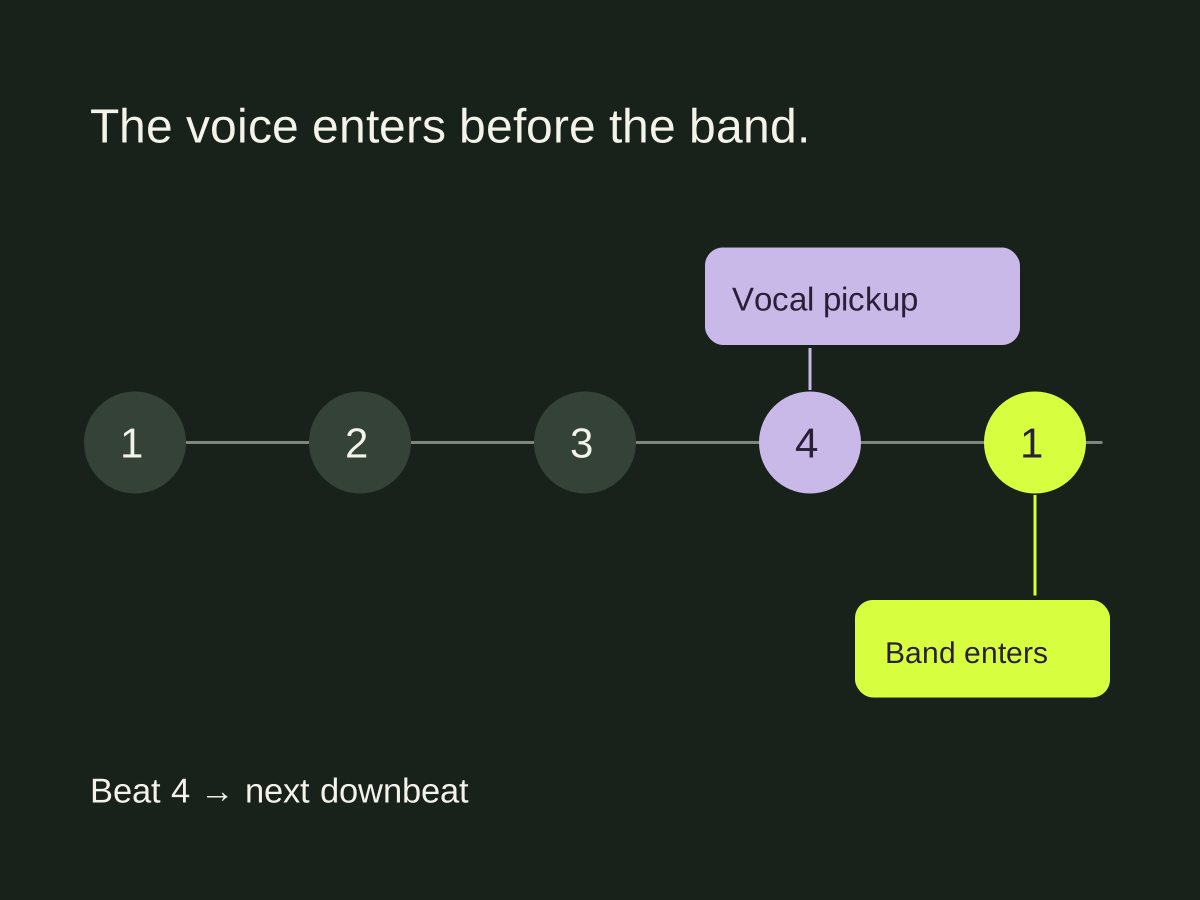
Imagine a 4/4 song at 120 quarter-note BPM. The accompaniment begins on the first full downbeat, but the vocal pickup starts one quarter note earlier, on beat four of the preceding bar.
Count “one, two, three,” then let the singer enter on four. The band comes in on the following one. The singer’s entrance is half a second before the accompaniment at this tempo.
The count is still organized around a four-beat bar. The singer is using the last beat musically. If a spoken “four” masks the first lyric, agree how to make that beat clear without covering the voice.
Make the entrance visible in your notes
Write “vocal on 4; band on next 1” beside the start. If the pickup begins on an eighth-note offbeat instead, mark that subdivision precisely. A note saying only “early vocal” leaves the timing open to interpretation.
For a pickup before a later chorus, start your test several bars earlier. Check that the section cue arrives before the pickup, which starts earlier than the full downbeat. See the cue placement guide for the distinction between the announcement and section marker.
Test it without a screen
Clap the pulse and speak the pickup before adding instruments. Repeat with the accompaniment entering on the agreed downbeat. Once the timing is shared, run the full phrase and listen for whether the lyric has enough preparation time.
In a prepared track, leave enough playback before the earliest note for the count-in to work. Do not trim that preparation away when exporting. Check the actual exported start in the player you will use.
The count-in overview covers complete 3/4 and 4/4 lead-ins. Use the Cuebie setup guide to prepare your click and spoken cues, checking their position against the recording’s real entrance.
Part of our count-ins guide.