
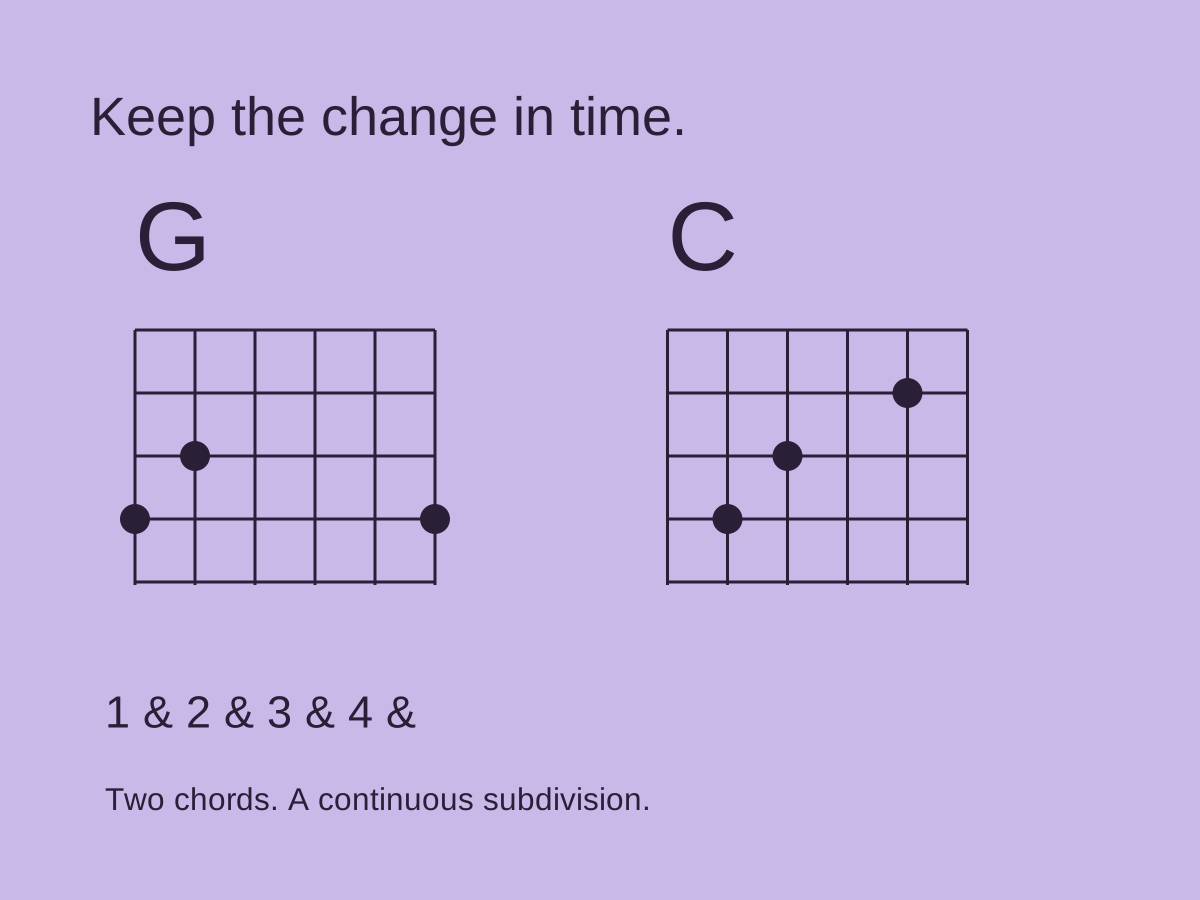
Choose two easy chords
Pick two chord shapes you already know and a tempo slow enough to change between them without rushing. For this example, use 4/4 at 80 quarter-note BPM with a click on each quarter note.
Play one chord for a bar and the other for a bar. Repeat that pair twice for a four-bar phrase. Use a simple sound and a comfortable volume so you can hear the pulse alongside your guitar.
Start with one strum per beat
Count a full bar before starting. Strum on beats one, two, three and four. Change chord on the first beat of the next bar. Keep listening to the click as you move to the new shape.
If the change arrives late, leave the final strum of the preceding bar silent and use that time to prepare your fretting hand. Then restore the missing strum when the change is comfortable. This gives your fretting hand more preparation time without changing the length of the bar.
At this tempo each beat lasts 0.75 seconds. One bar lasts three seconds, so the four playing bars occupy 12 seconds.
Add eighth notes without doubling the click
Keep the metronome at the same tempo. Count “one and two and three and four and,” placing downstrokes on the numbers and upstrokes on the offbeats if that motion suits your part.
The click still marks the numbers. You supply the halfway points. Start with muted strings if changing chords makes the subdivision hard to hear. Return to the two chords once the right-hand motion is steady.
After four bars, rest for a full bar while the click continues, then begin again on one. A clean restart checks whether you kept your place while your hands stopped.
Apply the rhythm to a section change
Take a verse-to-chorus change from your rehearsal material. Play into it from several bars earlier with a simplified strumming pattern. Add the full rhythm after the chord change and entrance are consistent.
If the guitar phrase begins before the section downbeat, work out the pickup timing with the band. A count-in that only prepares the downbeat can arrive too late for your first note.
The practice overview puts this exercise into a larger routine. For rehearsal with a recording, prepare click and cues using the Cuebie guide and check that the recording holds the fixed tempo you chose.
Part of our practice guide.