
Write the outcome before the song list
A rehearsal plan should say what you want to improve before everyone goes home. “Play the set” is a valid goal when you are testing a show. If you are still learning the arrangement, a more useful outcome may be “agree the bridge length and land the final chorus together.”
Ask each player for one passage that needs attention. Combine overlapping requests and agree which passages the band will work on together. Send the song versions and section names ahead of time.
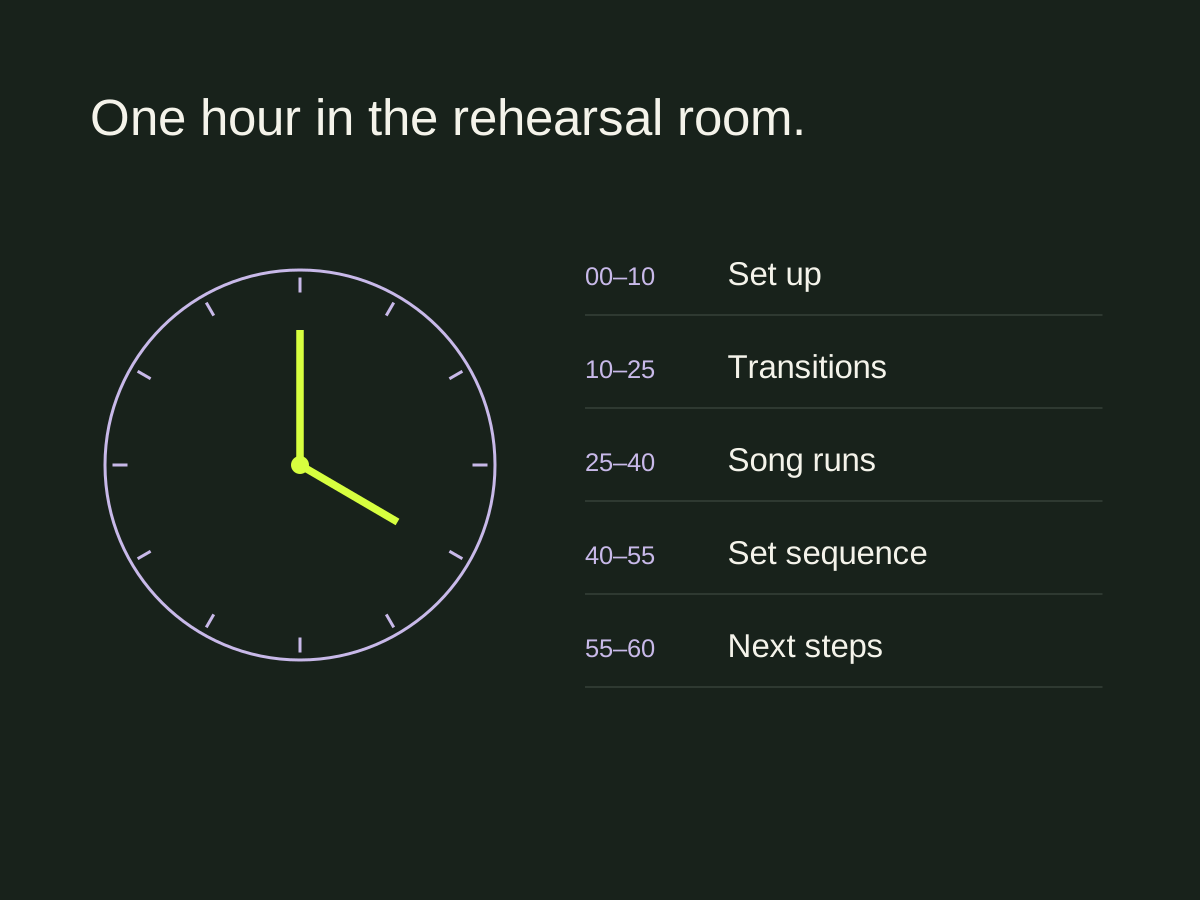
A worked 60-minute session
For a band that already knows its parts, try this 60-minute plan and adjust the timings to your session.
- 0 to 10 minutes: set up, tune and check that everyone can hear the agreed reference.
- 10 to 25 minutes: work on two specific transitions, starting several bars before each change.
- 25 to 40 minutes: play the relevant songs through and note problems without stopping for every slip.
- 40 to 55 minutes: run the planned sequence, including starts, endings and gaps.
- 55 to 60 minutes: agree changes and assign preparation for next time.
If setup takes longer, shorten the plan deliberately. Leave unfinished items on the list for next time.
Restart before the difficult change
When a chorus entrance is loose, beginning directly on the chorus can hide the cause. Start in the preceding section so players must count the approach, hear the cue and prepare the new part.
Name what you are checking before the attempt: the number of bars, the pickup, the first attack or the dynamic change. Repeat enough to see whether the fix holds, then play farther through the song. A transition that only works when isolated may still need attention in context.
For a shared timing reference, try the metronome routine. If players keep losing their place during a break, a count-in or section cue can make the next entrance explicit.
Rehearse the gaps between songs
Run the end of one song into the preparation for the next. Check tuning changes, instrument swaps and who starts playback. A song order that looks good on paper can leave someone unable to start the next piece promptly.
Include any spoken introduction you expect to give on stage. Time the sequence with those gaps so the set length reflects more than recorded song durations. The setlist worksheet gives you a place to record these transitions.
Leave with usable notes
Record the agreed tempo, arrangement version and any revised section length. Give each unresolved item an owner: a player learns a part, someone revises the track or the band checks an ending next time.
A note such as “bridge now eight bars; vocal pickup on beat four” preserves a decision. “Bridge better” does not tell the next session what changed. Share one agreed version so bandmates do not prepare from contradictory notes.
Cuebie can keep prepared songs in Library and organize a playing order in Setlists. Use the app guide for that workflow. Your rehearsal notes should still capture the arrangement decisions the band makes.