
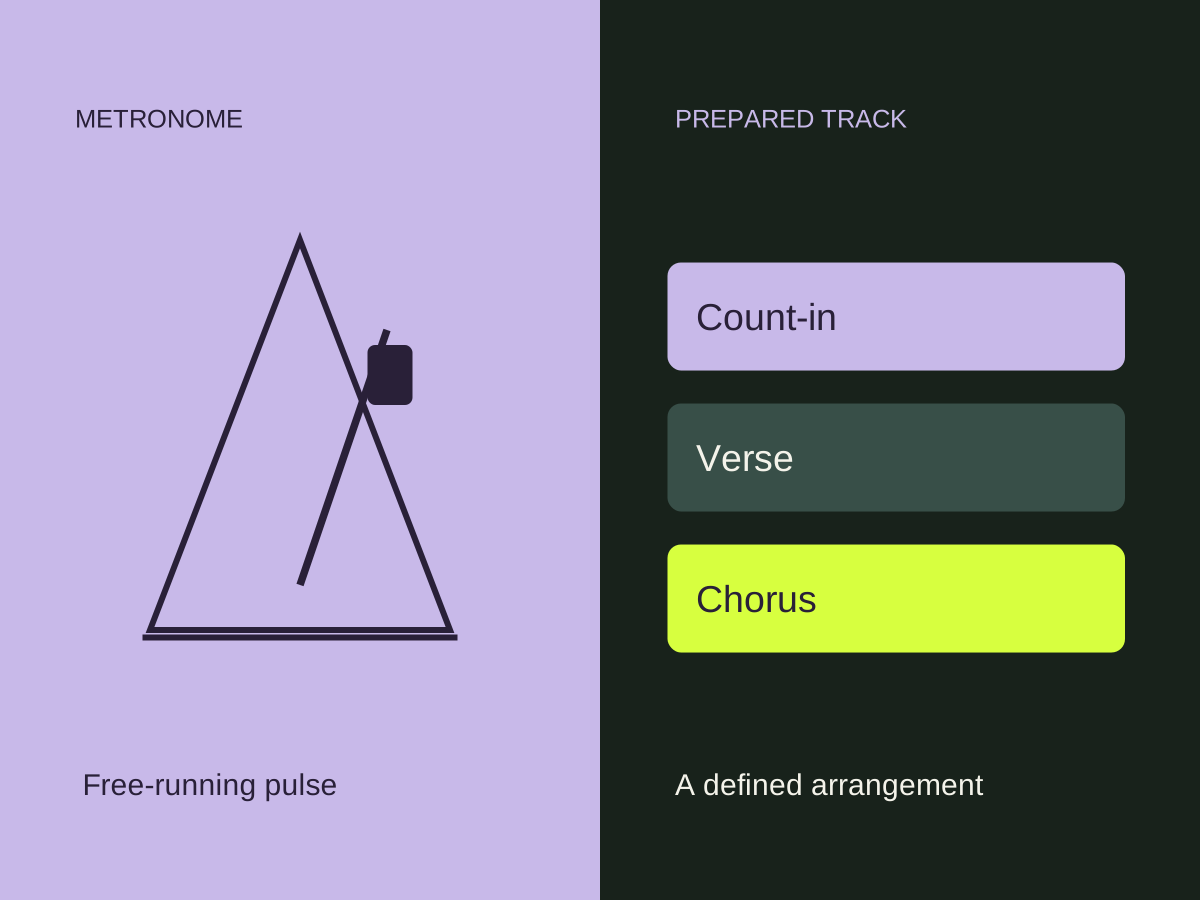
They can produce the same pulse
A metronome generates a timing pulse. A click track is the audible timing reference used with a musical performance or recording. In everyday conversation, musicians sometimes use the terms interchangeably because a metronome can supply that click.
When planning a rehearsal, decide whether you need a free-running pulse or a track prepared for a particular arrangement. A metronome can keep ticking until you stop it. A prepared track has a defined timeline, which can include a lead-in, section cues and an ending.
Use a metronome for a short exercise
If you are repeating a four-bar rhythm, a metronome is often enough. Choose the tempo, decide what each click represents and count yourself in. You can stop and restart without editing a song timeline.
You still need to keep your place in the form. The pulse cannot tell you that you have played the verse one time too many. Try our metronome routine to practice counting through rests and approaching a transition.
For practice without a reference recording, the tempo is yours to choose. Once you play against an existing recording, alignment becomes another requirement.
Use a prepared track for arrangement-specific timing
A prepared click can begin at an agreed point relative to your recording. Spoken cues can name the chorus before the band enters it. That gives the player an audible reminder of the next section.
This is useful when the rehearsal question is “Where do we return after this break?” A continuous metronome can supply the pulse through the break; a prepared cue can also identify the return. Read how to plan those announcements before adding them to every section.
A prepared click does not require musical backing audio. If the band supplies all the musical parts live, the timing track can remain a private guide for the musicians.
Compare them against the same problem
Suppose you need to rehearse an entrance after eight bars of rest. First use a metronome and count the bars. This tests whether the band understands the form and can keep its place.
Then try a prepared track that announces the upcoming section before the entrance. Listen for whether the extra instruction helps. Keep the tempo and instrumental parts the same while comparing the approaches.
If both versions drift away from the reference recording, investigate the recording’s tempo. A fixed pulse will not follow a performance that gradually speeds up. The sync guide separates tempo mismatch from start-offset problems.
Choose for the passage you are rehearsing
Use a metronome when you mainly need a pulse for a repeatable exercise. Prepare a click and cues when their relationship to a recording and arrangement matters. For a live show, also decide who operates playback and how the private timing reference reaches the musicians.
Cuebie includes a metronome workflow and tools for preparing fixed click and spoken cue tracks with a song. Start with the setup guide, or read the click-track overview if you are introducing the idea to your band.
Part of our click tracks guide.